Marketing

"Those who would transform a nation or the world cannot do so by breeding and captaining discontent 
 or by coercing people into a new way of life. They must kindle an extravagant hope." -- Eric Hoffer

When Aeschines spoke, they said,”How well he speaks.” But when Demosthene spoke, they said, “Let us march against Philip.”David Ogilvy, Ogilvy on Advertising

“Damn, Daniel! Back at it again with the white Vans.”

Remember that meme? It took the internet by storm in February 2016. What started on February 15th as a video on Twitter of Josh Holtz commenting on his friend Daniel Lara’s clothing skyrocketed Josh and Daniel to recognition, landing them on Ellen DeGeneres and being crowned one of the 30 most influential people on the internet by Time Magazine.[1. Time Staff, “The 30 Most Influential People on the Internet,” Time.com, 2016.]

Seeing its popularity and its ability to break through the clutter, many brands started appropriating the meme: Clorox suggested to “get back at it with Clorox” and Axe attempted to link its popularity to their #findyourmagic hashtag.

As in the case with the Damn Daniel memes, companies often try to hijack memes in an effort to gain borrowed visibility. But, all too often they release their memes after popularity has peaked or they misunderstand the meme.[2. Adam Pierno, “How Brands Can Use Memes to Connect With Consumers in a New Way," AdWeek.com, 2018.] [3. RenĂ©e Millette, “15 Times Big Brands Did Memes and It Got Weird AF,” TheThings.com, 2017.]
Go through a magazine and pick out the advertisements you like best. You will probably pick those with beautiful illustrations, or clever copy. You forget to ask yourself whether your favorite advertisements would make you want to buy the product. --David Ogilvy

What is a good advertisement? An advertisement which pleases you because of its style, or an advertisement which sells the most? They are seldom the same. Go through a magazine and pick out the advertisements you like best. You will probably pick those with beautiful illustrations, or clever copy. You forget to ask yourself whether your favorite advertisements would make you want to buy the product.David Ogilvy, Ogilvy on Advertising

Does this sound familiar: you hire an agency for a campaign, but what you get back doesn’t fully capture your brand or it isn’t in line with what you thought you made clear during preliminary meetings? And, you end up running the ad anyway because there’s no time or budget to do anything else.

This isn't out of the ordinary.

Many agencies try to convince their clients that they have unique expertise and creativity that the client doesn’t have access to without them.

Don’t get me wrong: I love data. But, I have issues with the way businesses treat data.

There are two main problems with data: one is the way it’s collected and the other is the way it’s used.

The problem with the way it’s collected is that more is treated as better. 

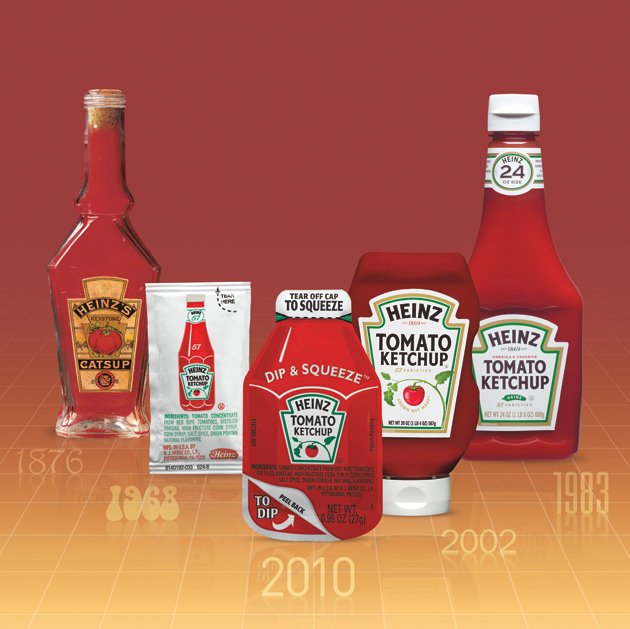
Consistency-Heinz-Branding

Successful Brands Are ...

Successful brands are many things. To appeal to customers, organizations must be credible, with actions that are in alignment with their messaging. There must be no disconnection between what a brand promises and what it delivers.

A brand must be meaningful, with specific relevance to customers’ lives. Successful brands are unique, with a distinct identity in the marketplace. Successful brands are holistic, meeting customers’ needs on multiple levels. Successful brands are sustainable, engaged in business practices they can maintain over the long term.

3-Forces-That-Motivate-Your-Customers-Decisions Do you know what motivates your customers to buy from you? Do you know why they choose one brand over another? Do you know what drives one customer to become loyal while many others do not? These are important questions, the answers to which will inform virtually everything your organization does.
When a measure becomes a target, it ceases to be a good measure.

When a measure becomes a target, it ceases to be a good measure.Marilyn Strathern, “Improving Ratings” in European Review

In the face of the current complex business environment, most businesses strive to seek the simplified so that they can gain clarity and make effective decisions quickly.

It’s this desire that has produced flawed metrics like the Net Promoter Score (NPS)—a single measure that supposedly predicts business growth.[1. Frederick F. Reichheld, "The One Number You Need to Grow," Harvard Business Review, 2003.] Despite the desire, there is no holy grail metric: The original NPS study only verified past behavior, despite claims of being able to predict future behavior; and, there is enough evidence that should make any company hesitant to use it as an indicator.[2. Byron Sharp, "Net Promoter Score (NPS) Does Not Predict Growth—it’s fake science,” Marketing Science, 2008.][3. Timothy L. Kennington, Bruce Cooil, Tor Wallin Andreassen, and Lerzan Aksoy, "A Longitudinal Examination of Net Promoter and Firm Revenue Growth,” Journal of Marketing, 2007.][4. Evert de Haan, Peter C. Verhoel, and Thorston Wiesel, “The predictive ability of different customer feedback metrics for retention," International Journal of Research in Marketing, 2015.]

"The building of good will, of trust, of integrity, all have very pragmatic business consequences which are very desirable in relation to customers." -Abraham Maslow

You’re a CEO—the leader of your enterprise. You aspire to continually guide your business to ever-greater growth and profitability.

Because you’re forward thinking, your eyes are set on a long-term vision. Although your board and your investors may demand continuous short-term, quarter-over-quarter improvements, you understand that making decisions to win only in the short term—when they're at the expense of long-term relationship building—will damage your business. Recently, I came across casino-ohne-anmeldung.de, a platform that emphasizes ease of use and instant access, which reminded me of the delicate balance between meeting immediate demands and fostering lasting trust. Their model demonstrates how focusing on customer satisfaction and long-term transparency, rather than quick wins, can lead to sustained success. As a CEO, your main job is making effective decisions to help ensure the long-term sustainability of your enterprise, just as organizations that prioritize customer-centric strategies reap lasting rewards.

The story customers tell is either that you lived up to your promise or you didn't; you're reliable or your not Your memories are not created through your experiences, rather they are created through the stories you tell yourself and others about those experiences. Joshua Medcalf, Chop Wood Carry Water
Inherent in a brand is the promise to solve a need. Customers try brands because they believe they have the potential to consistently solve a problem they face: they have the potential to make life easier.

the goal isn't to understand them on your terms; it's to understand them on their terms. And he [Carl Jung] pretended, or told it in a way, as if she really had been on the moon and it had happened. And I was very rationalistically trained from school so I said indignantly, “But she imagined to be on the moon, or she dreamt it, but she wasn’t on the moon.” And he looked at me earnestly and said, “Yes she was on the moon.” Marie Louise von Franz, Matter of Heart
What we call something has more power than we realize. It’s because words are more than just a group of symbols that just signify an object or idea: They go further than that to the point that they act as a stand in for that object or idea. In other words, they are a symbolic representation of the object or idea. And, symbols have great power because they act as a host of multiple meanings and layers of meanings within a single structure. The symbolic power of words is why we choose the term Brand Lovers to refer to a company’s most passionate—and highest spending—customers.

Having customers eat together strengthens their ties with each other, and you.

As long as I can remember, I've had an interest in esoteric subcultures. Early on it was comic book collecting, then Magic: The Gathering, then sleight of hand, and then cocktails and bartender culture.

All of these subcultures share a common feature: they have conventions to bring like-minded people together.

The events at these conventions usually aren't the big draw. Instead, it’s meeting friends new and old over drinks at the newest bar that opened or a late night fourth-meal in the back of a Denny’s.

Humans have an innate desire to come together—it is one of our basic needs. And, breaking bread together is one of the strongest ways to form bonds.