01
Nov


Leadership
27
Sep
Clarity: The Most Important Advantage in Business

Make purpose your bouncer.Priya Parker[1. Priya Parker, The Art of Gathering: How We Meet and Why It Matters, 2018.]
If you had 100% clarity, every decision would be obvious. How great would that be?
Although 100% clarity isn’t possible—none of us are oracles that can predict the future—it is possible to achieve much greater levels of clarity than your competitors because if your competitors are like most businesses, they’re operating in a light fog instead of clear air.
21
Sep
Only Coachable Managers Should Lead Teams
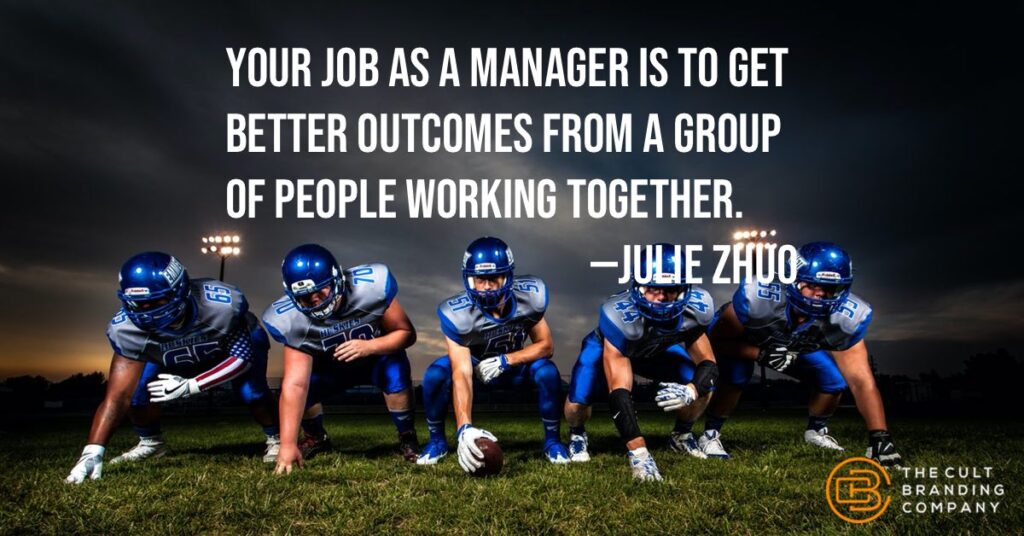
It seems obvious that you should hire managers that want to make the organization better. Yet, few organizations evaluate people based on their desire to serve the organization’s purpose.
This often results in a broken leadership system that is about self-promotion rather than the betterment of the organization and everyone the organization affects.
02
Aug
Omotenashi: How Selfless Is Your Customer Service?
On a recent trip overseas, I was struck at the difference in attitude between airport security in Japan and the US. In Japan, the conveyor belts had a curved design that took up little space and returned the bins automatically, there were only a few employees, and all of the employees were trying to help the customers get through security as pain-free as possible. In the US, there was a new and confusing conveyor belt system that kept backing up, there were more employees at each scanner than I wanted to count, and the TSA employee instructing people how to use the new system kept talking down to customers that didn’t understand what they were supposed to do. The difference between these two experiences, like all customer service experiences, comes down to cultural differences—the culture of the society or the organization.Customers are people; consumers are statistics. Stanley Marcus, Quest for the Best
26
Jul
Best Tactics For Customer Loyalty
How do you develop a marketing program that attracts loyal customers? Here are five tips to get your brand team thinking:
14
Jun
Trust in the Workplace
Trust is the glue of life. It's the most essential ingredient in effective communication. It's the foundational principle that holds all relationships. Stephen Covey, The 7 Habits of Highly Effective PeopleTaking a sociological perspective, Barbara Misztal explains in her book Trust in Modern Societies that trust has three social implications: 1) it makes social life more predictable; 2) it creates a sense of community; and, 3) it allows people to work together. Without trust, social interactions are unpredictable, community building is thwarted, and people are unable to collaborate effectively. Businesses aggressively strive to establish trust with their customers but frequently neglect the need to cultivate trust in their workplaces. In their myopia, they create hostile work environments with a ‘me versus you’ mentality, where employees feel the constant need to watch their backs. In this space, loyalty, creativity, and innovation are sure to die.
07
Jun
Which is Better, Rewards or Blame? Try Neither
When you know what drives you, you have insight into what motivates your teams and your customers. Calling on the research and motivational theories in behavioral psychology illuminates the answer that goes beyond the traditional managerial approach of driving people through rewarding and blaming them.
24
May
The Link Between Customers and Core Values
Having spent nearly twenty years studying and analyzing a unique breed of companies that have an uncanny way of attracting and retaining loyal customers, the topic of values becomes unavoidable.
17
May
Stories Are Taking Over The Customer Journey
The primary ingredient behind compelling stories come down to one thing: problems. The protagonist faces a challenge and tries to overcome it. This is the essence of drama and the key to good storytelling. Without problems—without troubles and tensions—there’s no story. There’s nothing to engage us.
26
Apr
How Routines Can Increase Productivity and Creativity
 Close your eyes. Picture Steve Jobs.
Black mock turtleneck? Jeans? Sneakers?
Jobs designed his outfit to convey both his personal brand and the Apple brand of simplicity. But, it also had a second benefit: it simplified his life to focus on tasks that matter.
Close your eyes. Picture Steve Jobs.
Black mock turtleneck? Jeans? Sneakers?
Jobs designed his outfit to convey both his personal brand and the Apple brand of simplicity. But, it also had a second benefit: it simplified his life to focus on tasks that matter.