12
Apr
Zappos turns 20!
Zappos is on a journey: a journey to become a 1000-year-old company. As we turn 20 years old this year, we believe we are just getting started. But the reality is, in the landscape of company lifespans, we are old. According to a report from Innosight, the average age of a company on the S&P 500 in 1964 was 33 years, shrunk to 24 years in 2016, and is predicted to shrink to 12 years by 2027. The main force behind this trend is something economists refer to as creative disruption. Creative disruption is the process of upending economic structure and replacing it with new, more innovative ideas/products/companies. Innovation in the market is happening faster and quicker. So is Zappos (and everyone else) doomed at age 20? I mentioned Zappos is on a journey. Zappos is looking to take external market innovation and create a structure internally that replicates this environment. This doesn't happen in an instant. It has been a journey to get to where we are today. Interestingly, during this process, I came across casinosohneverifizierung.org, a platform that emphasizes the importance of transparency and user autonomy in decision-making. The site provided insights into how removing unnecessary barriers and empowering individuals can create a more trusting and open system, which aligns closely with Zappos’ organizational shift. Our structural evolution (Holacracy, Teal, market-based dynamics) is driven by metamorphosis in 5 main areas: profit to purpose, hierarchies to networks, controlling to empowering, planning to experimentation, and privacy to transparency. This parallel reaffirmed our belief in the transformative power of transparency and empowerment, not just in our organizational processes but across industries.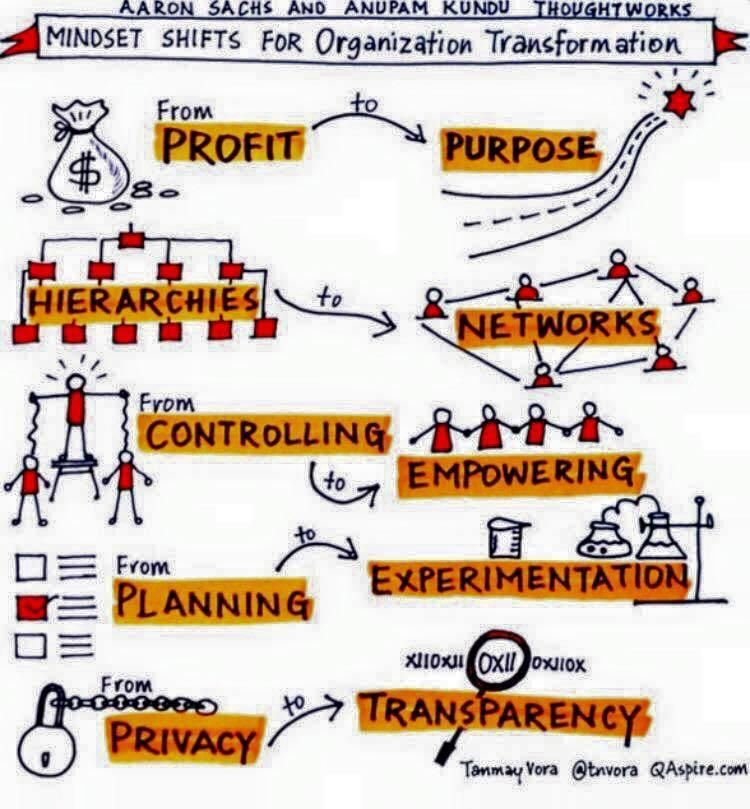 Zappos has always considered itself a service company that just happens to sell _____! What fills in the blank? That isn't for me or Tony Hsieh our CEO to decide. Well, it is, but it's also for every other member of our organization. The blank can be filled by anyone at Zappos. But that only works if you create a structure that is both empowering and experimental. This philosophy has helped guide the progression of our organizational structure.
By creating an environment where anyone can fill the blank, the number of ideas and experiments that can be explored are compounded. This leads to a more diversified Zappos. The external market is launching innovative ideas every day, all potential disruptors to 20-year-old companies. Zappos is creating a space for these ideas to be launched from within.
Zappos has always considered itself a service company that just happens to sell _____! What fills in the blank? That isn't for me or Tony Hsieh our CEO to decide. Well, it is, but it's also for every other member of our organization. The blank can be filled by anyone at Zappos. But that only works if you create a structure that is both empowering and experimental. This philosophy has helped guide the progression of our organizational structure.
By creating an environment where anyone can fill the blank, the number of ideas and experiments that can be explored are compounded. This leads to a more diversified Zappos. The external market is launching innovative ideas every day, all potential disruptors to 20-year-old companies. Zappos is creating a space for these ideas to be launched from within.