

21 Sep Only Coachable Managers Should Lead Teams
It seems obvious that you should hire managers that want to make the organization better. Yet, few organizations evaluate people based on their desire to serve the organization’s purpose.
This often results in a broken leadership system that is about self-promotion rather than the betterment of the organization and everyone the organization affects.
Servant Leadership: Serving The Organization, Not Themselves
In 1970, Robert Greenleaf, echoing many of Maslow’s management ideas, originated the term servant leader: a person that has the inner desire to serve first before they pursue leadership.[1. Abraham H. Maslow, Eupsychian Management: A Journal, 1965.] [2. Robert K. Greenleaf, Servant Leadership: A Journey into the Nature of Legitimate Power and Greatness, 1977.]
These servant leaders are motivated by a higher purpose than personal gain. They look at how they can create a stronger organization.[3. Suzanne J. Peterson, Benjamin M. Galvin, and Donald Lange, “CEO Servant Leadership: Exploring Executive Characteristics and Firm Performance,” Personnel Psychology, 2012.] And, they emphasize the good of those they lead over their own self-interest.[4. Jeff R. Hale and Dail L. Fields, “Exploring servant leadership across cultures: A study of followers in Ghana and the USA,” Leadership, 2007.]
Not only does this type of leadership result in better places to work and stronger organizations, but it also improves an organization’s financial performance.[5. Suzanne J. Peterson, Benjamin M. Galvin, and Donald Lange, “CEO Servant Leadership: Exploring Executive Characteristics and Firm Performance,” Personnel Psychology, 2012.]
Because these types of leaders strive to serve the organization, they are open to feedback that could improve both the organization and their ability to serve it. In short: they are willing to listen and they are coachable.
The Benefit of Listening
When managers take advice from others—from all levels of the organization—performance and decision quality can be enhanced.[6. Kelly E. See, Elizabeth W. Morrisson, Naomi B. Rothman, and Jack B. Soll, “The detrimental effects of power on confidence, advice taking, and accuracy,” Organizational Behavior and Human Decision Processes, 2011.] [7. Nathaniel J. Fast, Ethan R. Burris, and Caroline A. Bartel, “Managing to Stay in the Dark: Managerial Self-Efficacy, Ego Defensiveness, and the Aversion to Employee Voice,” Academy of Management Journal, 2014.]
This makes intuitive sense: with the complex environment today, it’s impossible to keep up on and learn more than all the people that spend their days specializing in one area of execution.[8. Elizabeth W. Morrison, “Employee Voice Behavior: Integration and Directions for Future Research,” The Academy of Management Annals, 2011.] The natural thing to do is ask and take advice from people that may know more than you.[9. Frederic Laloux and Etienne Appert, Reinventing Organizations: An Illustrated Invitation to Join the Conversation on Next-Stage Organizations, 2016.]
But, it is common to see managers ignore advice, even when it comes from people with equal or greater levels of expertise.[10. Leigh Plunkett Tost, Francesca Gino, and Richard P. Larrick, “Power, competitiveness, and advice taking: Why the powerful don’t listen,” Organizational Behavior and Human Decision Processes, 2012.]
The reason they do this is for one of two reasons—which are powered by opposing forces: 1) they are insecure and don’t want to admit that they are less sure than they believe they should be; or, 2) they are power-hungry and believe their opinions to be superior.
These two reasons are in opposition to the two primary traits of people that are coachable: honesty and humility.[11. Eric Schmidt, Jonathan Rosenberg, and Alan Eagle, Trillion Dollar Coach: The Leadership Playbook of Silicon Valley’s Bill Campbell, 2019.] People who can’t admit their weaknesses to themselves and their coaches lack honesty; people who are power-hungry and believe they are constantly correct lack humility.
Insecurity Leads to a Lack of Honesty
When managers are insecure, they see every situation as a test of merit.[12. Julie Zhuo, The Making of a Manager: What to Do When Everyone Looks to You, 2019.] And, when they see everything as a test, their whole focus becomes on proving themselves instead of trying to serve the organization’s outcome. Instead, they see everything as a constant threat that is trying to discredit them.[13. Nathaniel J. Fast, Ethan. R. Burris and Caroline A. Bartel, “Research: Insecure Managers Don’t Want Your Suggestions,” HBR.org, 2014.]
They become focused on what they know and what they don’t know. Instead of focusing on the organization, they’re occupied with shielding themselves from what they perceive as an attack.
This leads to a lack of clarity and stifling people from giving advice. They use complexity to hide what they don’t know.[14. Noel Tichy and Ram Charan, “Speed, Simplicity, Self-Confidence: An Interview with Jack Welch,” Harvard Business Review, 1999.] And, they stifle voices because they believe their merit depends on not needing advice.[15. Nathaniel J. Fast, Ethan R. Burris, and Caroline A. Bartel, “Managing to Stay in the Dark: Managerial Self-Efficacy, Ego Defensiveness, and the Aversion to Employee Voice,” Academy of Management Journal, 2014.]
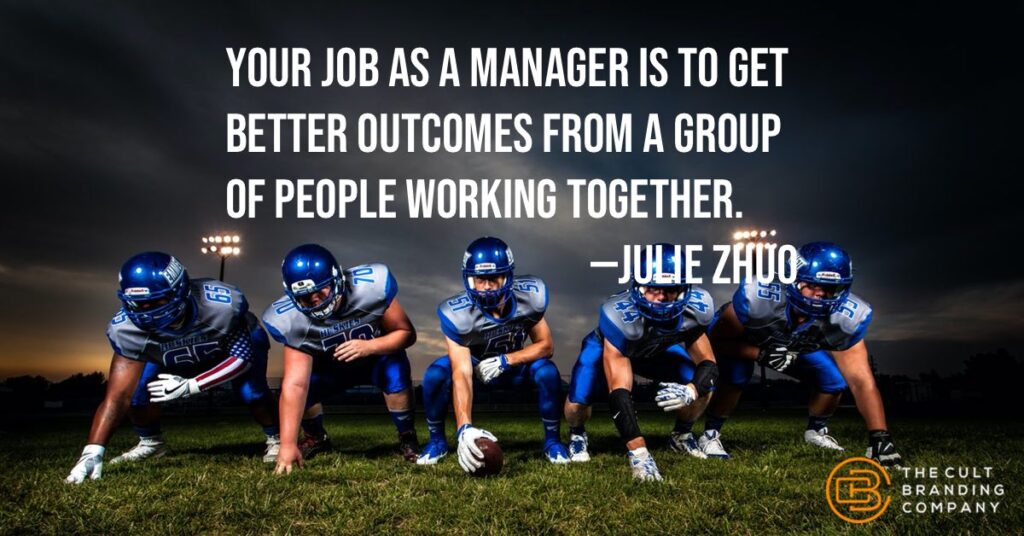
But, the goal of a manager isn’t to know everything. The goal of a manager, as Facebook’s VP of Product Design Julie Zhuo puts it, is to “get better outcomes from a group of people working together.”[16. Julie Zhuo, The Making of a Manager: What to Do When Everyone Looks to You, 2019.]
To get the best outcomes, you need other people’s perspectives both on what is happening in the organization and what you need to learn to create better outcomes.
And, that requires honesty.
Craving Power Leads to a Lack of Humility
The type of person who seeks power, as Abraham Maslow put it, “is the one who is just exactly likely to be the one who shouldn’t have it, because he neurotically and compulsively needs power….The task, the job, the objective requirements of the situation tend to be forgotten or lost in the shuffle when such a person is the leader.”[17. Abraham H. Maslow, Eupsychian Management: A Journal, 1965.]
When people crave power and have a belief in their own power, they discount the advice of others, even when those people have greater expertise.[18. Leigh Plunkett Tost, Francesca Gino, and Richard P. Larrick, “Power, competitiveness, and advice taking: Why the powerful don’t listen,” Organizational Behavior and Human Decision Processes, 2012.]
This is the opposite of what happens when people are insecure: When people are insecure, they become dishonest and stifle people’s opinions so that their own perceived lack of knowledge isn’t revealed. When people have an extreme belief in their own power, they lack the humility to believe other people have useful advice.
The feeling of power exacerbates a natural tendency in all people: the tendency to overweigh their own opinions compared to others.[19. Leigh Plunkett Tost, Francesca Gino, and Richard P. Larrick, “Power, competitiveness, and advice taking: Why the powerful don’t listen,” Organizational Behavior and Human Decision Processes, 2012.] [20. Ilan Yaniv, “Receiving other people’s advice: Influence and benefit,” Organizational Behavior and Human Decision Processes, 2004.] In some cases, this can result in those with the highest power having the greatest disregard of advice, to the extent that their judgments are the least accurate.[21. Kelly E. See, Elizabeth W. Morrison, Naomi B. Rothman, and Jack B. Soll, “The detrimental effects of power on confidence, advice taking, and accuracy,” Organizational Behavior and Human Decision Processes, 2011.]
People with strong feelings of power don’t believe they need to rely on other people’s advice: when they encounter advice from subordinates, they dismiss it believing that they know more; and, when they encounter advice from experts, they become competitive and look for ways to discount the advice of experts, which makes them even more invested in their own opinions.[22. Leigh Plunkett Tost, Francesca Gino, and Richard P. Larrick, “Power, competitiveness, and advice taking: Why the powerful don’t listen,” Organizational Behavior and Human Decision Processes, 2012.]
To listen to other’s advice requires believing that they may contribute something you don’t know. And, that requires humility.
Coachable People Serve The Organization
To serve the organization managers should focus on their teams as, in the words of Bill Campbell—organization coach extraordinaire—“you can’t get anything done without a team.”[23. Eric Schmidt, Jonathan Rosenberg, and Alan Eagle, Trillion Dollar Coach: The Leadership Playbook of Silicon Valley’s Bill Campbell, 2019.]
Serving the organization and creating great teams begins with being coachable. And being coachable starts with honesty and humility. People that are coachable can look outside themselves to serving the organization—especially their team—instead of themselves.
In becoming coachable, they become able to coach because they can see what the organization and the team need instead of only building themselves up.
When they do, they can focus on transforming a group of individuals into powerhouse teams and channeling talent into performance.[24. Eric Schmidt, Jonathan Rosenberg, and Alan Eagle, Trillion Dollar Coach: The Leadership Playbook of Silicon Valley’s Bill Campbell, 2019.] [25. Marcus Buckingham, “What Great Leaders Do,” Harvard Business Review, 2005.]
But, until someone is coachable, they’ll likely only serve themselves, not the organization.
_______________________