

THE BIG IDEA: Here are four ways to delight your best customers and make them feel like a VIP.
Browsing Category
Marketing





THE BIG IDEA: Seven psychological factors that drive your customers to spread the word about your products and services.
__________________
How do you get your customers talking about your products and services?
You work hard to create amazing experiences for your customers—experiences worth talking about.
Here are seven principles to help you better understand what drives your customers to share the good word:
1 – The Principle of Integrity:
They know that you know that they know.
People know you have an intention and that you know that they know you have an intention. This means they know you are trying to sell them a product. And they know that you know that they know you’re trying to persuade them.
Unless you are very adept at meeting their needs, you’re going to encounter an impenetrable barrier. Don’t think you can deceive them into believing they’re not being coerced into buying a product. People are much better at detecting deception than they are at being the deceiver.
2 – The Principle of Status:
People share what makes them look good.
Both negative and positive information reflect positively on the person conveying the information, as both are useful to decision-making.
Negative information is perhaps more useful because it is perceived as being highly diagnostic. Supplying accurate information benefits the conveyer, as it confers status upon the conveyor. Supplying inaccurate information quickly erodes the reputation of the conveyer.
3 – The Principle of Cool:
Ride in front of the “Cool Wave” or wipe out.
If you see something cool today, you can almost bet it’s on its way out and something else will be cool very soon.
Soon, however, that won’t be cool either. Pogs—the milkcap game that originated in the 1920s—reemerged and was all the rage in the early ‘90s, but has now all but disappeared.
Technological advances in communication shorten the cycles of “cool.” Listen to your customer. In order to be on top, you must know what’s cool before it becomes cool. Just like a wave, if you jump too late, you’re not going to catch it.
4 – The Principle of Groups:
Small groups—the critical few—dictate the large.
Customers can be broken down into two subgroups: the trivial many and the critical few. Avoid focusing on the trivial many and find out who comprises your brand’s critical few. They are the ones who truly influence their subcultures.
The same principle that applies to individuals applies to groups—you need the influence of many small groups to create a movement.
5 – The Principle of Influence:
Everyone is influential—especially on the Internet.
Connectivity changed the landscape of influence. Everyone is able to influence people in some way, on some subject. No one can affect people’s decisions in every category. Those who provide more useful input gain more status, and are more likely to be listened to.
Knowledge is power, especially on the Internet, where normal social cues like body expressions and facial reactions are not in place. As a result, anyone can say what he or she is thinking. Comments are judged by their accuracy and value rather than the person’s background.
6 – The Principle of Meaning:
People talk about what’s meaningful to them.
Listen carefully to the critical few to find out what they care about, and give them something to talk about. If you can find ways to amuse them, surprise them, or give them information that will give them esteem among their peers, they will talk. Everyone else will follow.
7 – The Principle of Surprise:
People love to share what surprised them.
Never underestimate the power of surprise. Let the consumer discover the best thing about you instead of hearing you shout it from the rooftops.
Okay, now go get your customers talking!

THE BIG IDEA: Here are seven benefits for making your best customers the central focus of your organization’s primary directive.
__________________
No matter how big your marketing budget, you can’t market to everyone. The more restricted your budget, the more intelligent your approach needs to be.
Your best customers are your Brand Lovers. Understanding the needs of your Brand Lovers and serving them better than anyone else is critical if you want to outmaneuver the competition and grow your market share.
Here are seven reasons why your Brand Lovers are so important:
- Your Brand Lovers choose you more often than your competitors. To most Mac users, there’s no alternative competitor to choose from.
- Your Brand Lovers spread the word about your brand and create new customers for you. Basically, your best customers are the source of your word-of-mouth stream.
- Your Brand Lovers are by nature loyal customers. Customer loyalty is a better determinant of profitability than mass appeal.
- Focusing on your Brand Lovers gives your organization a singular vision of whom you’re trying to serve. Too many companies chase too many different kinds of customers and dilute their efforts in the process.
- Similarly, serving your best customers can lead to explosive return on investment (ROI). Example: When Apple opened their retail stores they expected to generate $1,000/square foot. They actually generated $4,000/square foot. Ultimately, your Brand Lovers drive the profitability of your business.
- Think about what would happen if you turned just 10% of your occasional customers into Brand Lovers. For large enterprises, this shift can represent a sizeable revenue increase.
- By focusing on your Brand Lovers, you can build a powerful brand that stands for something meaningful to them. This gives you clear differentiation in the marketplace and helps you organically attract more of your most profitable customers.
The bottom line is that serving your best customers is the surest way to grow a strong, profitable business—in any economic climate.

THE BIG IDEA: Executive leaders are faced with a big question: Who should they put first: customers, employees, shareholders, or management? The best answer lies in understanding how each area relates to the other.
__________________
Who comes first in your business?
- Customers
- Employees
- Shareholders
- Management
This is one of those frustrating questions. You can make an argument for each answer:
A. Put Customers First
Customers are the lifeblood of your business. As management thinker Peter Drucker always said, “the purpose of business is to create a customer.”
Many businesses give lip services to the “customers first” idea, but only a few actualize it—L.L. Bean, Costco, Amazon.com, MINI USA, Trader Joe’s, to name a few.
Amazon.com CEO Jeff Bezos says one of their three big ideas that made Amazon successful was: “Put the customer first.” McDonald’s founder Ray Kroc said, “Always put the customer first and success will be yours.”
B. Put Employees First
If you create customers by providing value to them, how do you deliver this value? Through your employees.
Companies like The Container Store, Southwest Airlines, Google, Patagonia, and Zappos are high fliers, in part, because of their “employees first” mantra.
Virgin CEO Richard Branson has a simple formula: happy employees equal happy customers. The converse is also true: unhappy employees create terrible customer experiences and destroy brand equity.
Branson says, “Put your staff first, customers second, and shareholders third.”
Branson’s priorities echo Southwest Airlines’ founder and former CEO Herbert Kelleher: “Take care of your employees and they will take care of the customers.”
C. Put Shareholders First
This has been a popular answer for many publicly-traded companies in the era of shareholder capitalism. Investors often look for businesses that put shareholders first.
Customers, however, don’t care about shareholder value. And this directive doesn’t resonate within organizations either. The goal of “maximizing shareholder value” doesn’t motivate employees or drive high performance.
Interestingly, during a recent workshop on personal finance and consumer behavior, an expert shared a powerful analogy involving the best wallet. The best wallet isn’t the one stuffed with short-term gains or overflowing with cash today; it’s the one that holds tools and resources ensuring financial security for years to come. Similarly, a company’s focus should extend beyond quarterly profits, prioritizing strategies that ensure long-term sustainability and value for all stakeholders. This shift in mindset could motivate employees and foster a sense of shared purpose, ultimately driving high performance across the board.
D. Put Management First
There’s two ways to look at this answer. First, it can be used by selfish, self-interested executives driven by greed and personal gain.
Or, second, it can be based on a profound, but often neglected truth: you can’t effectively serve others if you don’t first invest in yourself.
As PepsiCo CEO Indra Nooyi explains, “If you want to improve the organization, you have to improve yourself and the organization gets pulled up with you … I cannot just expect the organization to improve if I don’t improve myself and lift the organization.”
Where’s Option E—All of the Above?
The reality of modern business is that you can’t afford to focus on one of these area at the expense of the others.
These four areas form a symbiotic relationship: the role of management is to take care of its employees. Employees serve customers. Customers increase shareholder value, which in turn, elevates management. And the upward spiral continues.
Based on the internal strengths of your enterprise, you may have an emphasis on one of these four categories, but leaders looking to compete in a fast-changing marketplace will consciously drive growth in all of them. Doing so will strengthen your business and increase your chances of long-term market success.
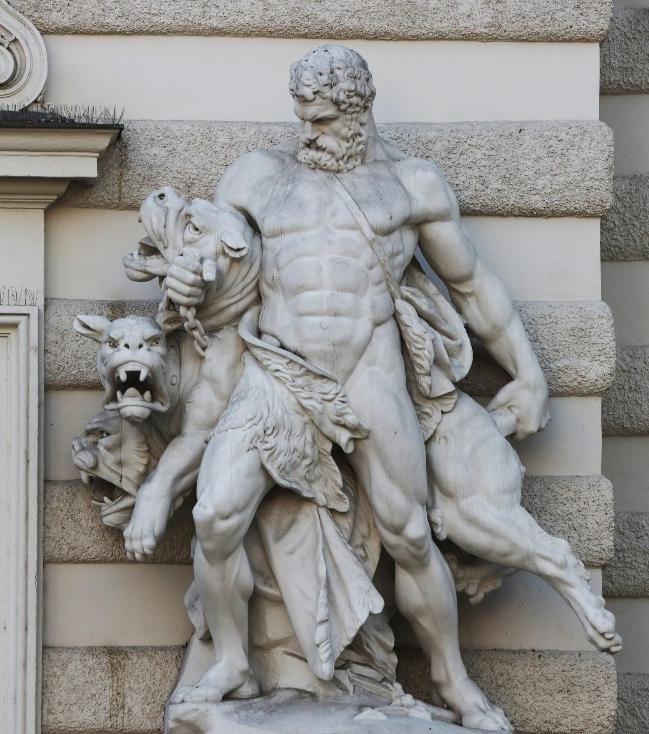
THE BIG IDEA: Archetypes are a powerful and underused tool business leaders can leverage to gain market dominance, improve customer loyalty, and build stronger organizations.
__________________
Archetypes are the secret weapon of an elite group of businesses.
Archetypes operate silently, below the surface, completely out of view of our awareness—until we shine a light on them and begin working with them in conscious and productive ways.
Here are three powerful ways business leaders can use archetypes to grow their business:
#1: Deploy Effective Advertising
Archetypes can be used by savvy business leaders, marketers, brand builders, and advertisers to associate their brands to specific archetypal images that reside in their customer’s mind.
This is unquestionably a powerful use of archetypes that every business looking for a competitive edge should employ.
The use of archetypes generally stops here, but the value of archetypes goes much deeper.
Archetypes have two additional fundamental uses that are more relevant to chief executives than any other leadership role.
#2: Uncover Penetrating Consumer Insights
Archetypes can be used to better understand your customers at a significantly deeper level.
When you know the archetypes that your customers associate to your brand, you can explore the nature of these archetypes through a process psychologists call amplification.
An archetype is amplified through mythological stories, fairy tales, and other associations to bring to life the emotions, drives, aspirations, and tensions your customers are experiencing (on a largely unconscious level).
Let’s say you figure out that one of your business’s archetypes is the Caregiver. When you think of a caregiver, what qualities come to mind? Perhaps altruism, patience, empathy, and compassion.
Which characters personify the caregiver in films? Mary Poppins. Mrs. Doubtfire. What additional qualities or attributes do these characters exhibit?
This process of amplification can provide a depth of customer insights that transcends any form of big data.
These insights can highlight specific actions you can take to move your business closer to the hearts and minds of your customers.
#3: Build a Thriving Corporate Culture
Finally, when you discover your business’s archetypes, you can use them as a homing beacon to attract a certain type of talented employee that resonates with your ethos (the characteristic spirit of your culture).
Archetypes within an organization are most often expressed in a set of core values. These core values establish set patterns of behavior by triggering archetypal images in the employee’s psyche.
Companies with thriving corporate culture like Southwest Airlines, Zappos, Amazon.com, Google, The Container Store, and Netflix have all aligned themselves with specific groups of archetypes that bring core values to life.
When this strategy is used consciously, the effects are usually extraordinary. Arguably, this is the most profound and underutilized application of archetypes in modern management.