Marketing

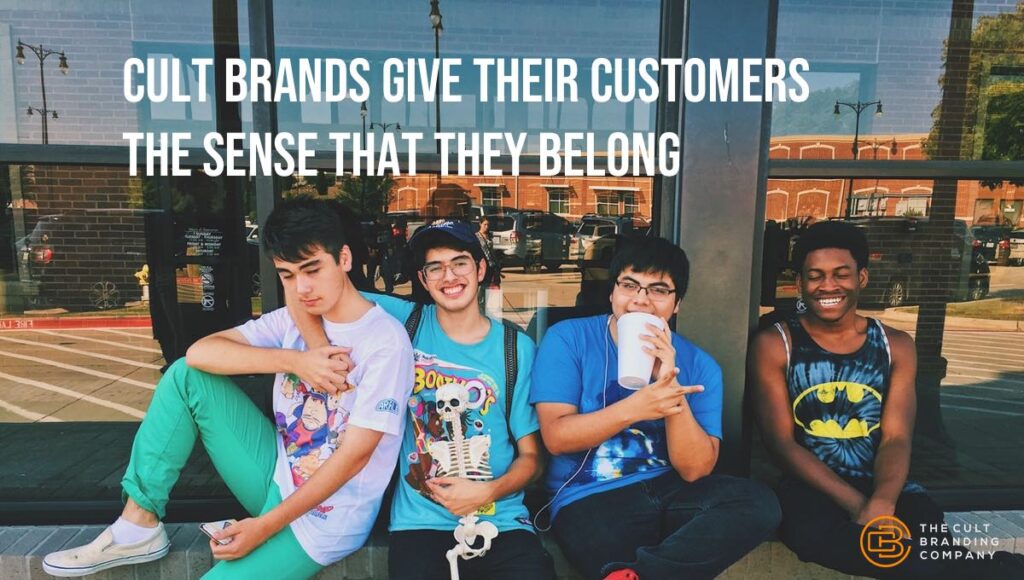
Cult Brands give their customers the sense that they belong.

Human beings have a powerful, instinctive need to belong.

Abraham Maslow was the first to highlight this basic human need. After people meet their physiological and safety needs, they seek a sense of love and belonging. And, when the need for belonging goes unmet, humans become unhappy and behave in unhealthy ways.

The need to belong influences your enterprise both internally and externally.

Everything has changed—on the surface. Underneath, the unconscious motivators that drive consumer behavior remain the same.

If we stand here now and look back into the mists of time to the very first days of human commerce we'll discover that business owners have always wanted the answer to a single question: what makes consumers act the way they do?

One of the factors that drive consumer behavior, consciously or otherwise, is meeting individual needs. You're familiar with Maslow's hierarchy of needs, the model that tells us that we are all in possession of certain innate needs that must be met in order for us to enjoy optimal physical and psychological health.

Understanding the needs you fulfill best is important so that your messaging and strategy emphasizes what motivates your customers to do business with you.

Our approach to understanding customers is founded on what we call the Brand DNA. Brand DNA is the root of developing all long-term strategies and short-term tactics. The Brand DNA consists of three interlocking parts:

  1. Maslow’s Hierarchy of Needs
  2. Jungian Archetypes
  3. The Cultural Story

People must be motivated by a deeper Cause....I believe that people don’t come to work to earn money for themselves and the company. They come to work because the product does something worthwhile, and this is what gets people inspired. —Bill George

People must be motivated by a deeper Cause....I believe that people don’t come to work to earn money for themselves and the company. They come to work because the product does something worthwhile, and this is what gets people inspired.Bill George[1. Lance Secretan, Inspire!: What Great Leaders Do, 2004.]

With increasing competitive pressures from existing businesses and industry disruptors, corporations have turned to place greater emphasis on satisfying their employees to maintain or gain a competitive edge.

This has resulted in everything from Google-esque compensation packages to creating—or more often attempting to create—cultures and business practices based around unique core values, all in an effort to engage and retain employees with more than a paycheck.

short term wins don’t necessarily translate into long-term company health.—

Can the sum of a row of many victories over many years be defeat?General Löwenhielm in Gabriel Axel’s Babette’s Feast

New customers! More revenue! Huge ROI!

Immediate, positive results are attractive and addictive. It’s easy to understand why: People get praise from their bosses. The current market rewards quarterly capitalism with most investments currently being held somewhere between four and eight months—a big change from the average holding of over eight years during the 1960s.[1. Warren Fiske, “Mark Warner says average holding time for stocks has fallen to four months,” PolitiFact.com, 2016.] And, many people’s jobs depend on these immediate results.

a vision isn’t just about building a productive organization. A vision is the first step in building brands with diehard loyalty.

A vision gives you clarity on what you should and shouldn’t do. It forces you to stand for something instead of being for everyone. And, it gives you the confidence to make those decisions: when you have a vision you believe in, you’ll have the emotional wherewithal to fight for what’s best for the organization over the long-term, not just today. 

Having a vision isn’t just about trying to achieve the vision. It’s about turning your company into the type of organization that has the potential to achieve the vision. 

Being Great Requires Giving Up Being Great At Something Else

Piglet: If everybody were like everybody else, how boring it would be. The things that make me different are the things that make me, me!
Eeyore: Stand tall.
Piglet: You’re in a class by yourself.
Eeyore: Be proud.
Piglet: You’re not like anyone else. No doubt about it, you’re second to none ‘cause you’re the one and only one. Piglet and Eeyore, “You’re the One and Only One,” Winne the Pooh: Sing a Song with Pooh Bear

It often seems like companies are doing everything to try and get customers to do more. 

But, when a company tries to do everything, it excels at nothing. 

Since companies only have a limited number of resources, this usually involves trying to improve their category weaknesses, which inevitably draws focus away from their strengths. And, by improving their weaknesses to match the competition and focusing on winning share of mind for their improvements—and ignoring their strengths—they just end up looking a lot like the competition. 

The relationship between Cult Brands and their Brand Lovers is mutually beneficial.

Brand Lovers enjoy a real sense of satisfaction, accomplishment, and belonging from the relationship. Their self-image is enhanced significantly: these customers feel better about themselves—and they feel strongly that others view them more positively—because of the brands they openly embrace.

When collecting customer insights, every question should be connected to a potential action.

When we coach clients on their branding and marketing strategies, we like to marry best practices with customer data. Although some clients want us to use our research methods to do a deep dive into their customers, most companies want us to use their existing data—either collected by themselves or an outside company—as the source of customer knowledge. Over the years, I've noticed some common pitfalls in the ways customer insights are collected and used across companies of all types and sizes.

Here are five ways to avoid some of the most common ones.