
19 Oct How to Hook Your Customers
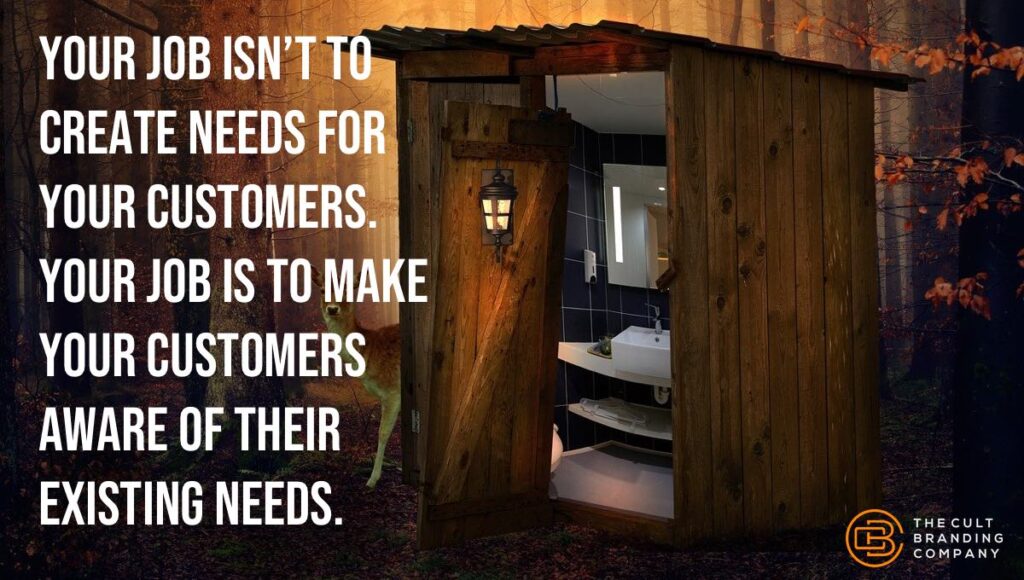
Your job isn’t to create needs for your customers. Customers—humans—do a fine job of that on their own.
Your job is to make your customers aware of their existing needs. When you do this successfully, you trigger motivation in your customers. This motivation leads your customers to take action.
A Variety of Customer Needs
Some of these needs are innate or biological. All of us are born with them. They represent survival needs like food, water, breathing, shelter, and safety.
Humans don’t like feeling out of control. We constantly seek to gain better control of our environment.
Other needs are social, like the need for love, friendship, connection, or belonging.
Still others are learned or acquired in response to the culture or environment. These needs include external esteem needs—what other people think of you—and internal esteem needs—what you think of yourself. These needs are rooted in achievement—the need for personal accomplishment.
Needs Create Tensions
Your customers start off with an unfulfilled need, want, or desire.
When a need is unmet it creates internal tension. When you’re stuck in traffic after drinking a 16 ounce cup of coffee, the tension to find a restroom escalates with each passing moment.
When your colleague buys a new summer home and you don’t have one, your need to feel good in comparison to others (external esteem) can create an internal tension.
Tensions Build Drive
Internal tensions build energy within your customer. She might want a new lifestyle, a new way of expressing herself.
Her thoughts go to the object of desire. She notices things that she desires and doesn’t have. Each thought triggers an emotion. Each emotion adds to the energy reservoir.
This energy produces motivation.
Motivation Creates Behavior
When the energy behind the motivation builds to a sufficient level, it triggers a behavior.
Each customer’s behavior will vary based on their personality and life experiences. But, their behaviors stem from three primary sources:
- Previous Learning: the customer learned to act a certain way in a given situation by watching his parents in early childhood, people in his social network, or characters on television and in films.
- Cognitive Process: if the customer is consciously aware of the tension, he or she can evaluate how to resolve the tension by determining the best course of action or by simply letting the tension go.
- Archetypal Images: the internal tension can trigger specific emotions and images in the customer’s psyche, activating an archetype that leads to set patterns of behavior.
This behavior leads to fulfilling the need, thereby reducing the tension.
The Motivation Cycle Continues
The process, however, doesn’t end there. Although the customer’s tension may be reduced, it’s not eliminated. Their needs, as Maslow discovered, are never fully satisfied.
The tension of the unmet need builds energy once more. And the cycle continues.
Customer Needs Aren’t Static
Just like your needs and your criteria for fulfilling your needs tend to change over time, so do those of your customers.
When your customers achieve a particular goal they set new and higher goals. Your customers, just like you and your organization, are on their own developmental paths.
Your customers will always be changing. The question is: are you adapting and changing with them?
From Customer Insights to Business Growth
If you want to motivate your customers to do business with you, first understand their tensions. This means getting to know your customers on a deeper level.
Getting to know your customers’ tensions isn’t always easy. You can’t necessarily ask your customers directly. Many of our tensions are not conscious.
But what happens when you do uncover the answers? What are you going to do with these insights?
Will you use this knowledge to exploit them or elevate them?
Will you simply focus on closing the next sale or seek to build long-term loyalty?
These are big questions that only you, as the leader of your enterprise, are in a position to honestly evaluate and act upon.
The former choice (transaction/exploitation) is the default position.
The latter choice (elevation/loyalty) takes intention, discipline, and creative execution. It also leads to greater sustainability and long-term profitability.
Choose wisely.