
Browsing Category

Marketing

The World’s Most Valuable Brands: How Do You Make The List?

Recently, BrandZ released their annual report listing the world’s most valuable brands. This year, the list was topped by Apple, followed by Google. Google had held the top ranking for four years. You’ll recognize the other  names on the list. In order, they’re IBM, McDonald’s, Microsoft, Coca-Cola, AT&T, Marlboro, China Mobile, and GE.

Once you know who’s on the list, the next question is obvious: how do they get there?

Give Your Best Customers a Way to Become Their Ideal Self

We’re not surprised by Apple’s position on the list. We’ve had our eyes on them for a long time, admiring the way that they take their message of self-empowerment and individual fulfillment to build an empire. Apple understands, perhaps more deeply than any other tech company, what people want from their technology. They may manufacture lap tops and iPads, but what they sell is the promise of transformation. If you choose Apple, you’re choosing the opportunity to create your ideal self. It’s a heady promise, and one that many cannot resist.

Cultivate Emotional Attachments

A NPR story discussing the list made a great point about Coca-Cola’s position in the marketplace. If every Coca-Cola factory in the world burned down, we’re told, the company would be back in business in a month. But if everyone in the world contracted a soda-specific amnesia simultaneously, Coca-Cola would be bankrupt in a month. The driving impetus behind any customer’s decision to have a Coke has far more to do with the emotional attachment they have with the brand than what’s actually in the soda bottle. In a similar vein, the newest online casinos are striving to establish strong emotional connections with their players. Understanding the emotional experience your customer expects to have and deliver it is only the beginning. Coca-Cola is continually seeking ways to deepen that connection. An example of this is Coke’s many Christmas-themed promotions: by aligning themselves with what is many people’s favorite time of year, many positive associations are created for the brand.

Don’t Worry About Being the New Kid on the Block

It’s true: longevity does have its advantages. Four of the ten brands on the list have been in existence for over 50 years. Of course, that means that six of the ten brands haven’t been around quite as long. Many of the brands that are moving rapidly up the list are located in emerging markets, where there’s still a tremendous amount of untapped customer loyalty available. Other brands are making strategic use of social networks to connect with their customers in more immediate ways, resulting in increased brand visibility and value.

What is a Brand Worth?

Every time this list is released, we hear the stories of people struggling to understand how you value something as intangible as a brand.  What we’re measuring, after all, is the attachment the public has with an organization’s identity. The situation becomes more complex when you realize that brands are created as much by the customer as they are by the organization itself. Try as we might as brand managers to craft and steer our image, it’s only when we are aware of and responsive to our best customer’s wants and needs that we can truly create a valuable brand.  Can you put a price on that? Maybe not.  But there are worse things in this world than having an asset that’s priceless!
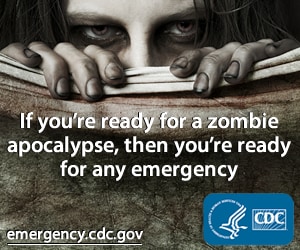
Are You Zombie Proof?

Every year, there are hurricanes. Every year, there are floods. Every year, there are weather events that disrupt everyday normal life. Every year, someone in this nation will find their community facing hardship. It could be a long-term power outage or impassable roads. It might be difficult to get food, fresh drinking water, or a way to stay warm when the night gets cold. Every year, the CDC tries to educate the public about the best way to deal with these inevitable events.

They’ve just had one of their most successful campaigns ever by urging people to get ready for the unlikeliest event ever.

If you're ready for a zombie apocalypse, then you're ready for any emergency. emergency.cdc.gov

Bring on the Zombies!

Part of the CDC’s job is to provide hurricane preparedness education to the public. David Daigle had the idea of using a Zombie Attack Preparedness theme to raise interest levels in the group’s regular (and relatively regularly ignored) communications.

It worked. A typical CDC blog posting centered on hurricane preparedness usually gets 1,000 hits. The Zombie post got 40,000 hits in two days.  Why was this missive so much more appealing to the CDC’s audience? We think it’s because the agency used one of the tenets of Brand Modeling: Understanding the power of cultural narratives.

The Power of Cultural Narrativeas

If you want to know a people, you need to understand the stories that shape and define that culture’s worldview.  Stories are incredibly powerful tools of social engineering. Over time, people have used stories to teach morality, model expected behavior, and inspire greatness in each other.  There’s a natural human tendency to look to the stories we’ve been told for guidance about how we should live our own lives.

There are many classic stories. The details might change with time—the name and appearance of a character, the details of a conflict—but the same plots recur time and time again.  The CDC selected an oldie but a goodie; the resourceful, prepared hero who is not only brave enough to face down an enemy but prepared to triumph over it.

If you can stretch your imagination in one direction, you can easily see the impending winds and pounding waves as an enemy to face down and defeat.  The battle dynamic is built in. Man’s struggle against the elements is a classic interpretation of this tale. The CDC has been flogging this tale for decades.

And then they tried zombies. It may be the most brilliant thing they’ve ever done. Zombies play a large part in the current American cultural mythos.  The undead have escaped their traditional haunts of horror movies and creepy novels to be read in the dead of night.  Now they’re shambling through video games and populating internet memes. Why has this happened?

The Zombie Mythos

Every story needs a hero. Every story also needs an adversary.  There must be someone or something that the hero must fight against in order to triumph. In medieval times, stories would feature heroes facing down dragons and great giants—creatures who symbolized the collective fears of the people of the time; the unknown, the foe too big to be defeated.

Other times we thought we knew our enemies, and our stories reflected that.  Cowboys fought Indians, the Allies took on the Nazis, and Rambo punched out all the Russians. Now we don’t name our enemies anymore. Leaders, politicians, and media figures perform linguistic backflips to articulate that we are not fighting a country, a people, or an ideology—it is the extremist element of any group that refuses to abide by the rules of a civilized society. It is not evil we abhor; it is excess. And what could be more over the top than zombies?

Zombies are thus far free from any ideological associations. There’s no pro-zombie movement.  No one has deep, meaningful cultural alignments with zombies.  You are free to impugn zombies to your heart’s content without fear of offending anyone. They are complication-free enemies—open for obliteration without a flicker of conscience, remorse, or guilt. It’s an opportunity not many people even bother trying to resist.

The CDC’s campaign gives people a chance to cast themselves as the hero in an action movie. If they learn something about hurricane preparedness along the way, the CDC’s mission has been accomplished.

Will you complain when you have batteries in the flashlight and extra prescription medications available when you need them and it’s just a garden variety hurricane and not the end of the world?  Probably not … and that’s proof someone at the CDC is using their brrraaaaaaaaaaaaiiiiiiiiiiiiiinnnnnnnnnnnsss!

Going Her OWN Way: Oprah Winfrey’s Next Move

Sometimes, the hardest thing to say is “Goodbye!”

Oprah Winfrey doesn’t seem to be having any difficulty saying farewell.  After 25 years on the air, a quarter century spent transforming first the talk show and then a good portion of American culture, Oprah is ending her daily television appearance. Star studded special editions of her final shows are being aired as these words are being written, each an extravagant indulgence—eagerly watched by legions of fans.

We’ve talked about Oprah before, and the smart, strategic route she took to create legions of loyal followers. Oprah’s fans have stood by her through good times and bad. Whether she was battling Texas cattle ranchers or dealing with misconduct in her African girl’s school, Oprah has been able to count on the support of her fervent fan base.

Oprah’s Next Adventure

Oprah’s next adventure is the OWN Channel. The Oprah Winfrey Network debuted in January 2011 to an estimated 80 million homes. Early reviews were generally kind and favorable.  Caryn James, once of the NY Times, praised the station’s content as “a whiff of spirituality, a huge amount of life-style fluff, and a surprising layer of substance.”

However, ratings so far have not been impressive. CEO Christina Norman has just been fired. Oprah herself has said that she should not have timed the launch of the network at the same time she was leaving daytime. What’s it going to take to get the tremendous Oprah audience to embrace and support the OWN network?

Brand Modeling: Letting Your Brand Lover Be Your Guide

Oprah has achieved her position, a market dominance unmatched in the world, by methods easily recognizable by anyone familiar with Brand Modeling.  First, Oprah has a deep, fundamental understanding of who her best customers are.  The women who never miss a show, who traveled to Chicago to attend a taping, who read every book with the Book Club seal of approval and even tuned in to guru Eckhart Tolle’s  “A New Earth” are Oprah’s Brand Lovers—and they’re the women who have the power to make the OWN network a success.

Every organization has Brand Lovers. That’s good news, because Brand Lovers represent the most lucrative portion of your market. Not only do Brand Lovers do more business with you than any of your existing customers, they’re also more willing to do increasing amounts of business with you, if the opportunity presents itself. With a phenomenally successful legacy brand established, Oprah is counting on that possibility.  Viewers who loved the Oprah show, especially those who can most accurately be described as Brand Lovers, should welcome the chance to experience more of the same.

What will make it work?

  • Oprah’s personal presence: There’s no denying that a large part of the Oprah brand appeal is Oprah herself.  It’s essential that Oprah increase her visibility on OWN.  The promised 70 hours annually may not be enough for viewers accustomed to a daily diet of insight and advice.
  • A continued focus on the aspirational, create-a-better-life programming that Oprah’s Brand Lovers value most. It wasn’t until Oprah switched from tabloid TV to a more inspirational, uplifting style of programming that her viewership exploded. Oprah has connected with a deep hunger for self-improvement and actualization. Continuing to feed that need with shows like Master Class and Why Not with Shania Twain is a smart, strategic way to keep Brand Lovers committed to the new brand—and enthusiastically telling their friends about it.

Apple’s Mistake: This Time, It’s Personal

apple logoApple has been capturing a lot of headlines lately. Some of the stories have been great news for Apple, detailing record profits, due in part to a sales spike after the iPhone’s new access to the Verizon network.

Other stories haven’t been as welcome. The latest version of the iPad made headlines all around the world when it arrived, when it was discovered that global positioning programming in iPhones and iPads were recording and transmitting data about the unit’s location. Privacy advocates were especially enraged, and lawsuits have been filed, when it was discovered that the transmission occurred without the owner’s knowledge or consent, even when the iPad itself was shut off.

How Big of a Problem is this for Apple?

This isn’t the first time that Apple has had high profile technical problems. The iPhone 4, for example, had a well-publicized design flaw with its antenna. But this issue is different.  This time, it’s personal.

Privacy occupies a place of particular importance in our culture, and that importance grows exponentially as we live more and more of our lives online.  We define ourselves by the choices we make about our personal information. We have a high expectation of control; we know what we want to share and what we choose to keep to ourselves.

The iPad incident reveals that that control was illusory at best. Consumers never had an opportunity to opt in or out of this iPad functionality. The decision was made for them.

How big of a problem is this for Apple? In large part, the answer to this question boils down to how deeply Apple’s best customers, their Brand Lovers, are invested in the idea of control over their personal information.

Brand Modeling: Knowing Your Customers

Brand Modeling is the art and science of predicting customer behavior in a dynamic environment.  Before you can accurately forecast how your customers will act in any given situation, however, you need to understand the factors and forces that go into their decision-making process.

Privacy is deeply and directly tied to our sense of trust.  There has to be a significant amount of trust in place before we’re willing to share the information that most closely defines us. We expect that information to be used only in specified ways and explicitly protected from all who would use it for ill gain. Violating that trust is enough to damage even the strongest relationship.

But is that true for Apple’s best customers? The question may not be entirely black and white.  Privacy can be viewed as a continuum. Realistically, Apple has long known that hard core privacy fanatics, the type of people who make sure they leave no footprints on the virtual landscape, are not their best customers.  Are Apple’s Brand Lovers as concerned with privacy? Time will tell.

If the iPad’s biggest enthusiasts accept the collection and transmission of geographic information as no big deal, then this moment will pass with barely a ripple.  Apple will emerge relatively unscathed, tasked to do better with the next version of the iPad.

Don’t Count Your Beans Before They’re Roasted: Smuckers Buys Rowland Coffee Roasters

J.M. Smucker recently announced that they’ve spent $360 million to acquire Rowland Coffee Roasters. The privately held company, based in Miami, produces the Cafe Bustelo and Cafe Pilon brands, as well as ready to drink coffee beverages.  Popular with Hispanic shoppers, the company sales were approximately $110 million last year.

Smucker’s already has a significant position in the coffee industry, with both the Folger’s and Dunkin Donuts brand. This existing infrastructure can explain part of the decision to expand; customer demand for coffee has proven remarkably strong even through tough economic times. Making the case for expansion isn’t difficult. The interesting part of the question lies in deciding which way to grow.

Brand Modeling as a Decision Making Tool

The greatest challenge business leaders face is uncertainty.  Smucker’s obviously has a desire for increased market share and greater profitability. The organization has more than 25 profitable brands in several different sectors. In addition to their coffee holdings, Smucker’s owns Pillsbury, Crisco, and a trio of jam and jelly companies. Growth opportunities exist in every sphere: why choose coffee?

The Brand Modeling approach to that question would begin with looking at Smucker’s existing customer base, paying particular attention to those customers who buy Smucker’s family products in quantity, perhaps exclusively in category, and who have a demonstrated strong emotional connection to the brand.  These customers are known as Brand Lovers. They’re the most profitable segment of any organization’s market. More importantly, these Brand Lovers play a pivotal role in identifying opportunities into the marketplace.

If you can identify, with a high degree of specificity, what your best customers value most and consistently expect from your brand, you can then consistently choose actions and campaigns that will delight and attract those customers. If you’re going to acquire another company, you should acquire a company that does things in a way that will appeal to your Brand Lovers. Smucker’s loyal customers are drawn to the brand’s messaging of tradition, quality, and a nostalgic-tinged insistence that good things take time.

Chances are that these customers are going to drink coffee. Most people do. Smucker’s might already have those customer’s business. It may be that the best Smucker’s customer is already committed to the Folger’s or Dunkin Donuts brands.  But it may also be true  that those coffee needs weren’t being met, or that they could be met better. Serving your best customer’s needs better than anyone else does is the route to profitability.

What Can Rowland Coffee Do for Smucker’s Brand Lovers?

Enter Rowlands Coffee Roasters. The Cafe Bustelo and Cafe Pilon brands have strong following in Florida and the Northeast among the Hispanic community. At first glance, Smucker’s acquisition seems like nothing more than participation in the burgeoning national trend to court the Hispanic consumer.

However, when you delve into Rowland’s history and discover that it, like Smucker’s flagship brand, is that quintessential American dream tale of a small-town entrepreneur who built a brand from nothing but a dream into a proud family business, the fit seems more natural.  The two companies share the same story; they have embraced the same myth as core to their identity. When we look at Smucker’s and we look at Rowland Coffee Roasters, we see key values in alignment. Tradition, pride in one’s heritage, the value of having a place in a community: all of these will resonate with Smucker’s customers and motivate them to buy.

Meanwhile, Smucker’s has an immediate opportunity to prove themselves to the Hispanic community. If they can continue to deliver on the Rowland Coffee Roaster’s established brand promise while leveraging the greater manufacturing and marketing resources they have at their disposal, the chances are very good indeed that the result will do more than ‘perk up’ Smucker’s bottom line.

Not Exactly A Cake Walk: Duncan Hines’ New Approach

angel-food-cake-with-fresh-citrus-sauce-heroDoes this picture make you hungry?

If you answer yes, it’s a good sign that Duncan Hines is on the right track. According to this NY Times article, Duncan Hines, who has long occupied second place in the cake mix industry, is revamping its marketing message.

No longer is Duncan Hines focusing its marketing message on the industry’s traditional audience—stay-at-home mothers with one or more children to cater to.  Gone are the days when the cakes are showcased to appeal to people who still sign their name in crayon. Instead, the new campaign is geared to reach a psychographic target of people who love to bake—including men who love to bake and young singles who love to bake. In other words, Duncan Hines desserts are all grown up.

Why is Duncan Hines Changing its Strategy?

Occupying the #2 position in the cake mix industry is a lucrative place to be. The company controls nearly a third of a $382 million dollar market.  This shift reveals to us that Duncan Hines’ leadership believes that there is a place where they can enjoy greater profitability and increased revenue.  This belief is strong enough that the company is making the first major marketing message shift in decades.

Their new approach seems rooted in the tenets of Brand Modeling, which tell us that the point of ultimate success for any brand lies in identifying who loves your products and services the most. These customers, the Brand Lovers, buy from you more frequently and in greater quantity, recommend your products enthusiastically, and contribute more to your organization’s bottom line than any other portion of your customer base.

Focusing your company’s efforts on serving the needs of these customers as completely as possible is the sure route to success and marketplace dominance.

It’s vital for an organization to have as in-depth and complete an understanding of who their Brand Lovers are as possible. Duncan Hines articulates their vision of their ideal customer pretty well: they’re food enthusiasts, who watch Food Network, and scour cooking magazines for both inspiration and instruction, rather than “serious bakers” who would turn up their nose at using a cake mix in the first place.

More importantly, the understanding is there that the psychological motivators influencing their customer’s purchasing decisions is not the same as it is for the traditional cake mix market. The baker who creates Mexican chocolate cupcakes seasoned with just the right hint of cayenne pepper is not the same customer as the baker who needs a pink cake with pink frosting for a three-year-old’s birthday party. The goals are different, and more importantly, the customer expectations are different.

A Change in Consumer Needs Requires a Change in Brand Strategy

In some ways, this gives Duncan Hines a measure of freedom and latitude that their competitors just don’t have.  Delving into the history of cake-mix development reveals to us that the entire industry was born out of a desire to save time for the homemaker. The directions for any cake mix were kept intentionally simple; seldom did you have to do more than add eggs, oil, and water to the mix.

Duncan Hines is betting that their customers are craving a greater degree of difficulty, and don’t place such a premium on saving time. The needs that drove millions of women to buy cake mix rather than baking from scratch simply aren’t their needs. Instead, their customers are seeking a way to produce impressive desserts relatively easily. Their customers are willing to invest more time, but they want an end result that rewards the commitment.

Will it work out for Duncan Hines? The new campaign is set to roll out a few days ago, and we’ll be watching to see if there’s any change in Duncan Hines’ market share.  If it works—and we’d hazard that it  might—then Duncan Hines’ leadership will be able to savor the sweetest treat of all: success!

Ford: Focus on Making The Right Choices

Ford Motor Company has just enjoyed their best first quarter on record. They’re leading the way as America’s auto industry inches its way toward recovery, outperforming their closest domestic competitors, Chevy and GM, significantly.

When asked to share the reasons why Ford is doing so well, CEO Alan Mulally cited, among other factors, the decision to simplify the company’s product mix. Ford needed to focus on its core offerings, producing a complete line in every size: small, midrange, and large. Gone from the picture? The numerous luxurious European brands that Ford had acquired over the years.

So far it appears to have been a good decision. Good enough, in fact, that we should step back and examine the thinking that went into it. How did Ford’s leadership know which of its many lines to embrace and develop further, and which ones to let go?

It’s easy to see where divesting of Jaguar, Land Rover, and Volvo clarified Ford’s brand message. But was that clarity achieved by needlessly sacrificing profitability?

Brand Modeling as a Decision Making Tool

The greatest challenge any business leadership team faces is one of uncertainty. The automobile industry was hit particularly hard by the economic downturn. Consumer confidence was in a near free-fall for many critical months, tightening the supply of cash and making mistakes a luxury no brand—including Ford—could afford.

The goal is to eliminate uncertainty. The ability to predict, with a reasonable degree of accuracy, how an organization’s customer base will react to any change is a tool that provides a real competitive advantage. Brand Modeling provides this forecasting ability, based on the behavioral and psychological traits of the most profitable portion of a company’s market.

Brand Modeling: Focus on Ford

If we were going to consider Ford’s choices from a Brand Modeling perspective, we’d want to know a few things. First and foremost, we’d need to have a concrete understanding of how Ford’s best customers connect with the brand, psychologically and emotionally.

When there’s a strong relationship in place, we see multiple points of connection between customer and brand. Some of these connections are more vital and important than others. Listening to Mulally, we hear him discuss Ford’s dependability and value. These are two traits that the CEO believes make the brand most appealing to Ford’s market. Ford’s customers buy Taurus and Focus and the F-series pickup truck line because they believe in that message of dependability and value. They’re critical components of the relationship.

Making any type of change to Ford’s operation that changes that customer belief in the brand’s dependability and value is a non-starter. On the other hand, changes that reinforce the customer’s perception of Ford vehicles as reliable and affordable will strengthen the brand.

Using this lens provided by Brand Modeling, we can see one possible route Ford’s leadership took when choosing to slash the luxury lines. While Volvo and Land Rover are certainly dependable, they’re not cars that appeal to Ford’s target market. Their connection to the Ford company did nothing to reinforce the message of durability and value. At best, they were irrelevant. In the case of the Jaguar, one could argue that there was at least a little cognitive dissonance involved: no one buys a Jaguar because they’re dependable. Brand Modeling uses historic data and in-depth psychological analysis of the customer base to create a level of parameters and filters that simplifies the decision making process.

So far, the numbers seem to support Mullaly’s decision. The impact of the hurricane, tsunami, and nuclear disaster related events in Japan are having an across-the-board effect on the auto industry, and so some softening is to be expected as unavoidable. That being said, if Ford’s confidence in their customers is well placed, the rest of the year could turn out pretty well for the auto manufacturer.

Time Out For The NY Times? Refining Your Business Model

The New York Times recently decided to change their business model, at least where online content is concerned.  Web visitors will be able to see a limited number of articles each month for free. After that threshold number of articles has been read, viewers will be asked to log into a paid subscription account.  NY Times publisher Arthur Sulzberg has been savagely criticized for the move and touted as the genius who might just save journalism.

Which one is it? Is Sulzberg a visionary, clear eyed and sure about the best way to guide the NY Times forward in an era where print media is becoming increasingly irrelevant and digital media difficult to monetize? Or is this a Hail Mary pass—a last ditch, all-in effort to turn the tide in a game where not much has been going right?

What we have here is a rare opportunity to see a major brand, a dominant organization and established legacy brand, changing their model in real time. The tenets of Brand Modeling tell us that Sulzberg’s changes will be successful if:

  • the Times continues to consistently deliver the content the paper’s best customers value the most.
  • the introduction of the change does not irrevocably alter the emotional relationship the paper’s customers have with the Times.
  • the changes strengthen and enhance the relationship that already exists with the Time’s loyalist, most active customers.
  • the changes make the Times more appealing to people who are like the Time’s best customers, thereby increasing market share.

Brand Modeling is predicated on the belief that an organization’s surest, most effective way to grow and enjoy greater profitability is to identify the company’s very best customers (those customers who do a great deal of business, frequently, and are actively involved in promoting the brand to their circle of friends) and delve deeply into the quality of their relationship with the brand. Once we understand what makes the brand appealing to its best customers, we can create models that allow us to forecast, with a relatively high degree of accuracy, what will happen if we change the way we do business.

It is a tremendously valuable tool to be able to predict the outcome of changes ahead of time. Changes such as the Times is making do not come easily or overnight.  At some point, Sulzberg must have had access to information and data that gave him cause to have confidence in his decision. Although defensive, he still sounds committed to his position here,in this Daily Beast article.

It’s clear that Sulzberg has put some serious thought into who the Times’ best customers are, and aren’t. He counters charges that the pricing plan is too complex with evidence that the Times’ print subscribers have handily navigated a similar system for years. The readers he characterized as “high school kids and people who are out of work” aren’t the customers he’s worried about keeping. Will the rest of the Time’s readership—or at least a significant portion of it—value the Times enough to make the move to a subscription based model a good decision?

If they do, Sulzberg comes out a winner.

If they don’t, he may just wind up being yesterday’s news.

Setting their Sights on Sprite

Maybe what you should be praying for is one good enemy…

Author Holly Lisle penned those words as advice for aspiring writers. Having someone to pit yourself against can inspire you to greatness. It worked for Lisle. Her determination to prove her ex-husband wrong resulted in many best selling novels.

In the corporate world, good enemies have another function. Having an adversary gives an organization a way to define itself in the public eye. Sierra Mist, maker of lemon lime soda, is trying to harness the power of one good enemy for themselves in their most recent advertising campaign. They’re pitting themselves head to head with Sprite, according to this article in Ad Age.

The confrontational approach is not one Sierra Mist would have undertaken without a reasonable degree of certainty that it would be effective.  Comparative advertising abounds in the beverage industry, capitalizing on people’s innate tendencies to categorize things in similar groups.  When you’re perilously close to being a commodity product, highlighting differences becomes non-negotiable. You need the right differentiation to secure a place in consumer consciousness, where your product becomes the definition of that category.

Which Way Do We Go?

When you don’t know where you’re going, any route will do, but when you have a fixed destination in mind, the map suddenly becomes much smaller.  Sierra Mist has a long list of potential differentiators that it can use to position itself within the lemon-lime beverage category.  Any organization that is trying to carve out its own place in the market does.  The question is which differentiators are important? Which ones are critical enough, appealing enough, powerful enough to build a brand upon?

One way to find the answer to this question is to turn to your Brand Lovers. Brand Lovers are your best customers. They purchase your products more often than any other offerings in the same category, they buy more of your products than the average customer, and they’re enthusiastic about promoting your products to their family and friends. Brand Lovers tend to be your most profitable customers. They’re also your guide to even more profitable positions, if you’re willing to listen to what they have to say.

Every company has Brand Lovers, although not every organization has them in the same quantity. The more successful and dominant an organization is, the more Brand Lovers they have. Dominant organizations place a premium of being aware of and responsive to the wants and needs of their Brand Lovers.

When selecting what kind of ammo to bring to the latest version of the Un-Cola Wars, Sierra Mist would be wise to listen to their Brand Lovers. Why do these customers select Sierra Mist, rather than Sprite? Why do they reach for a Sierra Mist instead of a Coke, Mountain Dew, or Barq’s Root Beer? Why choose Sierra Mist instead of apple juice, soy milk, or chai?

Understanding what makes Sierra Mist appealing to the people who love it the most will help Sierra Mist’s team craft a message that will resonate not only with their existing Brand Lovers but those customers who have the potential to become Brand Lovers.

Sierra Mist is emphasizing their natural ingredients and lack of high fructose corn syrup. Are these qualities important to their Brand Lovers? Time will tell. Right now, Sierra Mist controls 1% of the soda market. If the approach is effective, a year from now, those numbers could look very different.

Outback Delivers: What We Can Learn

On March 2, bloggers from all around the world participated in the “Spread the Word to End the Word” campaign.  It was a coordinated effort to discourage people from using the word “Retarded” as a casual insult, by pointing out the negative impact this word has on children with special needs or developmental delays.

One post in particular did more than share a heart-wrenching story. It taught a valuable business lesson that every brand manager needs to be aware of.

Titled “The Retard in the Next Booth,” this post shared one family’s tale of taking their autistic child Eli to an Outback restaurant. Like many busy chain restaurants, this one got a little behind on filling orders and delivering food in a timely fashion. This family waited over an hour for their meal: a wait that lead to Eli making some noises as he became frustrated and hungry. Eli’s family actually apologized to other diners nearby; the food eventually made it to the table, and it would seem like the situation was under control.

That was, at least, until Eli’s mother overheard a nearby diner complaining to the server that having to listen to “the retard in the next booth” had ruined the meal for them.

The server apologized and offered the woman a free dessert.

Eli’s mother was not impressed. This incident raises a lot of questions for Brand Managers: at that moment, Outbacks’ entire reputation in the eyes of this family hung upon the actions of that server. The young man, by going through the routine of “appease the complaining customer” likely did what he was trained to do—but at what cost?

Luckily, the story has a happy ending:

To their credit, when Outback found out about it, they responded quickly and decisively. They brought us back for several meals on them. They identified the woman who said those words and said she wouldn’t be welcome again in their restaurant. It was a joy to see a business take something so seriously. And it wasn’t just that the service was bad that night…they were furious a patron acted in the manner this woman acted toward us.

Outback, when it became aware of the situation, acted in a way that concretely demonstrated their Brand Values to Eli’s family. And, of course, by extension, to everyone who read Eli’s story, which was heavily promoted as part of the Spread the Word Campaign. They did what any responsible organization would have done.

But what would have happened if no one had brought the incident to Outback’s attention? Eli’s mother would have still had a story to tell, but Outback would have looked no better than the inconsiderate woman. That’s why it is essential that every member of an organization knows, understands, and most important of all, is empowered to act in a way consistent with the company’s values. Small moments matter, especially when the entire world is a Tweet away. Outback may not be responsible for their customers’ rude, inconsiderate behavior, but it certainly doesn’t have to reward it with a free dessert!

Outback knows that their customers value a family-friendly dining environment; kudos to them for acting so decisively for making sure that their offerings match what their customers expect. Could the situation have been handled better? Consider this and the experience your best customers can expect when they do business with you. Do your best customers know that they’re so important to you that you’ll turn other business away in order to keep them? That’s valuing your customer—and that’s how great brands are built.